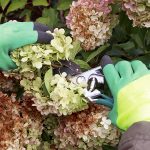
Autumn and winter are the ideal seasons to prune deciduous trees and shrubs in the garden, as it is a much easier job when the branches are bare of leaves. As long as you avoid days when there is a frost, it is fine to prune from November through to early March, except for evergreens such as holly and ivy, which are best pruned in spring.
Why do you need to prune plants?
If you are not a very experienced gardener, pruning is a task which you might put to the bottom of the list. However, it is important to prune plants to help them maintain a nice shape, and to get more sunlight, rain, and oxygen to the central area. This will promote healthy growth and more abundant flowering in the spring.
Overgrown trees and shrubs can also block paths and pavements, obstruct light from buildings and patio areas, and may lead to conflict with neighbours. It is much easier to keep on top of the task on an annual basis, rather than let it build up into a much more difficult job which may need tackling by a professional landscaping firm.
Use the right tools
It is important to use sharp tools which are in good working order, oiled, and cleaned, to get the best results. They will be easier to work with, and inappropriate or blunt tools could risk causing damage to the plant. Secateurs or loppers should be used, or a specialist curved pruning saw.
If tall trees have thicker branches at height which need removing or pruning, it is advisable to call in a professional gardener or tree surgeon, because of the high risk factor.
Cut the branches back to within a couple of centimetres the main stem, or just above a new bud which is facing outwards (inward facing buds should be removed where possible to encourage a well-balanced growth.)
Check for dead branches
It can be difficult at this time of year to know which branches are in a resting phase, and which ones have died. The best way to check if you are not sure is to scrape away some of the bark at the base of the branch—if there is a green core under the bark, then it will survive the winter. If it is brown or grey to the centre, the whole branch should be removed.
Next, consider the overall shape of the plant, and the direction of the branch growth. In general, you want the branches to be growing upwards and outwards, without crossing over each other too much. Longer branches can sometimes grow offshoots which turn back towards the stem, which should be removed unless it will make the plant look too sparse.
Once the damaged, dead, and diseased branches have been removed, and any straggly edges tidied up and inward or crossing branches removed, the plant should already be in much better shape.
Some smaller shrubs can become congested with dead wood around the base, which needs to be cleared out to help them survive and thrive.
If you are looking for driveways in Lancashire, please get in touch today.